September 8, 2026 | Contributor: Riski Maulana | Editor: Regiani Yunistika
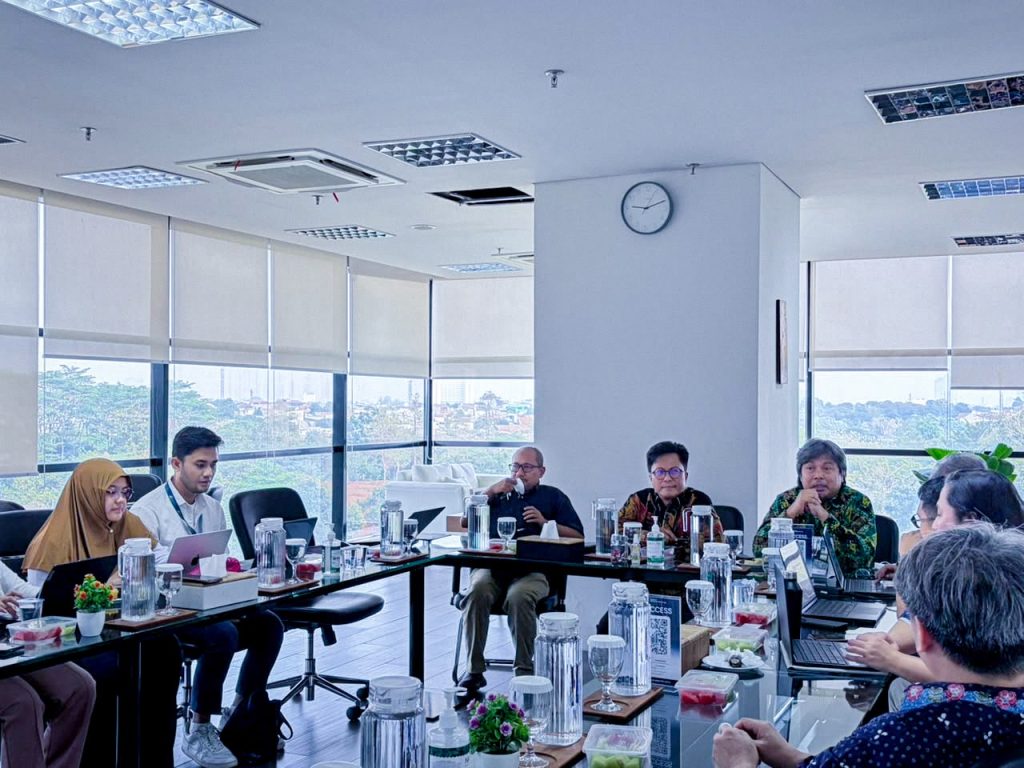
Depok, Indonesia – Universitas Islam Internasional Indonesia (UIII) has taken a significant step toward elevating its academic quality and institutional governance. The Faculty of Economics and Business (FEB UIII) recently held a preparatory stage meeting for international accreditation by the Association to Advance Collegiate Schools of Business (AACSB).
Held on September 8, 2026, at the UIII Rectorate Building, the meeting convened university and faculty leaders, representatives from the Center for Quality Assurance (CQA), academic program heads, faculty members, and internal auditors. The session featured Teguh Dartanto, Ph.D., former Dean of the Faculty of Economics and Business at Universitas Indonesia (FEB UI). He shared vital lessons and practical insights from FEB UI’s successful pursuit of AACSB accreditation.
The meeting emphasized that AACSB accreditation is not merely a target for international recognition. Instead, the process serves as a catalyst for broader institutional transformation. It aims to foster a sustainable culture of quality and continuous improvement across the university. R. Alpha Amirrachman, M.Phil., Ph.D., Head of UIII’s CQA, highlighted that this preparation is central to UIII’s efforts to enhance institutional quality and secure global prominence.
Aligning Mission and Institutional Direction
A key focus of the meeting was the strategic alignment of vision and mission statements across the university, faculty, and academic programs. As a specialized graduate institution, UIII must ensure that its academic mission, program structure, and development strategies reflect its distinctive institutional character. While individual programs do not require identical mission statements, their core objectives must cascade effectively from the institutional level. The discussion emphasized that these statements must be clear, concise, impactful, and achievable.
Strengthening Governance and Institutional Resources
Financial governance and institutional autonomy were identified as vital pillars for AACSB compliance. The discussion underscored the need for rigorous financial risk analysis and robust resource management. Strategic priorities must align tightly with available physical, virtual, and financial resources, directly corresponding to AACSB Standards 1 and 2. For UIII, international accreditation preparations will be seamlessly integrated into broader governance frameworks.
Faculty Qualification and Academic Engagement
Faculty classification remains a critical benchmark for AACSB, which recognizes four distinct categories: Scholarly Academic (SA); Practice Academic (PA); Scholarly Practitioner (SP); and Instructional Practitioner (IP).
The meeting noted that classification extends beyond academic degrees. It must actively factor in professional engagement, intellectual contributions, currency, and alignment with the school’s mission. UIII will undertake a comprehensive mapping of its faculty profile against these criteria as part of its accreditation roadmap.
Building a Reliable Data and Evidence System
Drawing from FEB UI’s experience, establishing a reliable, traceable data infrastructure is paramount. Developing the initial Self-Evaluation Report (iSER) requires data that is systematically maintained over time, rather than compiled ad hoc. Key data preparation areas include:
• Student progression and completion rates
• Graduate employment and career outcomes
• Faculty qualifications and intellectual contributions
• Curriculum mapping and Assurance of Learning (AoL) results
• Stakeholder feedback and measurable societal impact
The assembly stressed that stakeholder engagement must be verified through institutionalized mechanisms rather than occasional ceremonial events.
Toward a Sustainable Culture of Continuous Improvement
The preparatory meeting concluded that the journey toward AACSB accreditation is an integrated, university-wide transformation. As an immediate next step, UIII will conduct an institutional readiness assessment and a comprehensive gap analysis against the nine AACSB standards. This will form the foundation of a phased, measurable roadmap toward full accreditation. Through this process, UIII positions international accreditation not just as a milestone, but as a gateway to long-term academic excellence and global recognition.