September 10, 2026 | Contributor: Regiani Yunistika
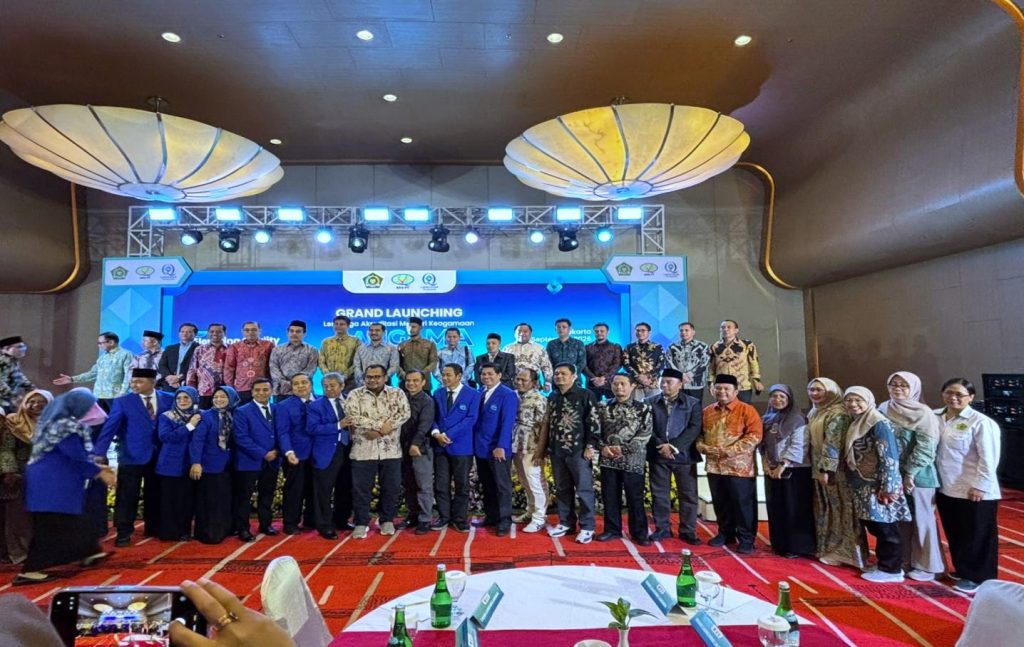
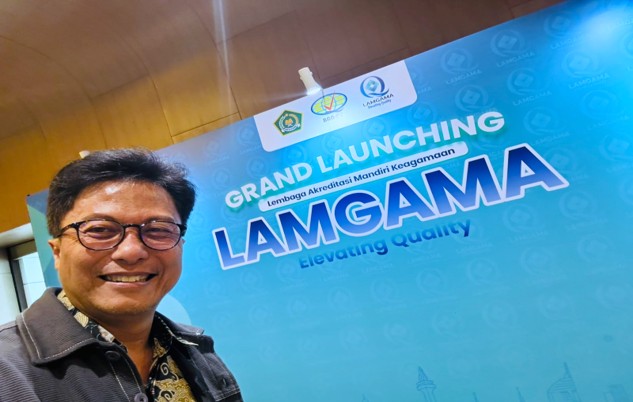
Jakarta — Indonesia’s religious studies programs are entering a new era of quality control. The Ministry of Religious Affairs (MORA) has officially launched the Independent Accreditation Agency for Religious Studies (LAMGAMA), marking a major structural shift for thousands of academic programs across the nation.
The launch took place during a two-day event at the Grand Mercure Harmoni, Jakarta, from September 9 to 10, 2026.
A Six-Year Journey to Global Standards
LAMGAMA debuts as Indonesia’s 11th independent accreditation agency, a milestone six years in the making. Spearheaded by the Association of Religious Studies Scholars (PIRIA), the agency is projected to oversee between 3,000 and 4,000 religious study programs nationwide.
The agency is introducing a specialized assessment framework called CRAM, which evaluates unique institutional criteria such as scientific integration, religious moderation, and religious infrastructure.
During the opening, Prof. Kamaruddin Amin, Secretary General of the Ministry of Religious Affairs, emphasized that the agency must look far beyond local compliance. “LAMGAMA should not just be a tool for domestic checkboxing, but a strategic vehicle to drive Indonesian religious education toward global recognition,” he stated.
The 90-Day Transition Window
The transition comes with a strict 90-day countdown running from August 10 to November 8, 2026. Consequently, the National Accreditation Board for Higher Education (BAN-PT) will stop accepting religious program applications after November 8, 2026; BAN-PT will only process submissions during this window if a program’s current accreditation expires within 180 days.
The “Excellent” Price Tag
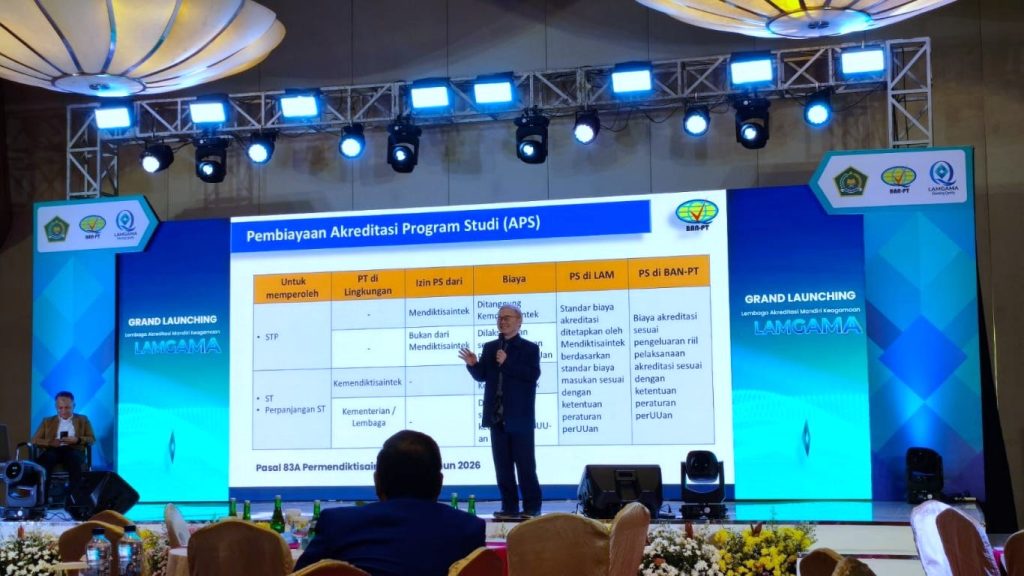
The restructuring also brings changes to university budgeting. While standard accreditation costs remain fully funded by the government, institutions aiming for the prestigious “Excellent” (Terakreditasi Unggul) status must now self-fund their applications.
The official independent rate is set at IDR 60,000,000 per study program.
Strategic Impact on Universities
For major institutions including Universitas Islam Internasional Indonesia (UIII), the regulatory shift requires immediate institutional action. Head of Center for Quality Assurance (CQA), R. Alpha Amirrachman, Ph.D., and Analyst of Education Quality at CQA, Regiani Yunistika, MEd attended the launch to map out the financial and administrative implications for UIII.
UIII has already identified key programs within its Faculty of Islamic Studies (FSI)—including two programs whose accreditations expire in 2028 and the Master in Islamic Turats (MTI)—that must navigate this new pipeline. The university is currently adjusting its annual budget (RKAT) to accommodate the new self-funding requirements for “Excellent” status while synchronizing its internal databases with the national PDDikti platform.