August 7, 2026 | Contributor: Indra Gunawan and Mugzhi Abdillah | Auditor: Riski Maulana
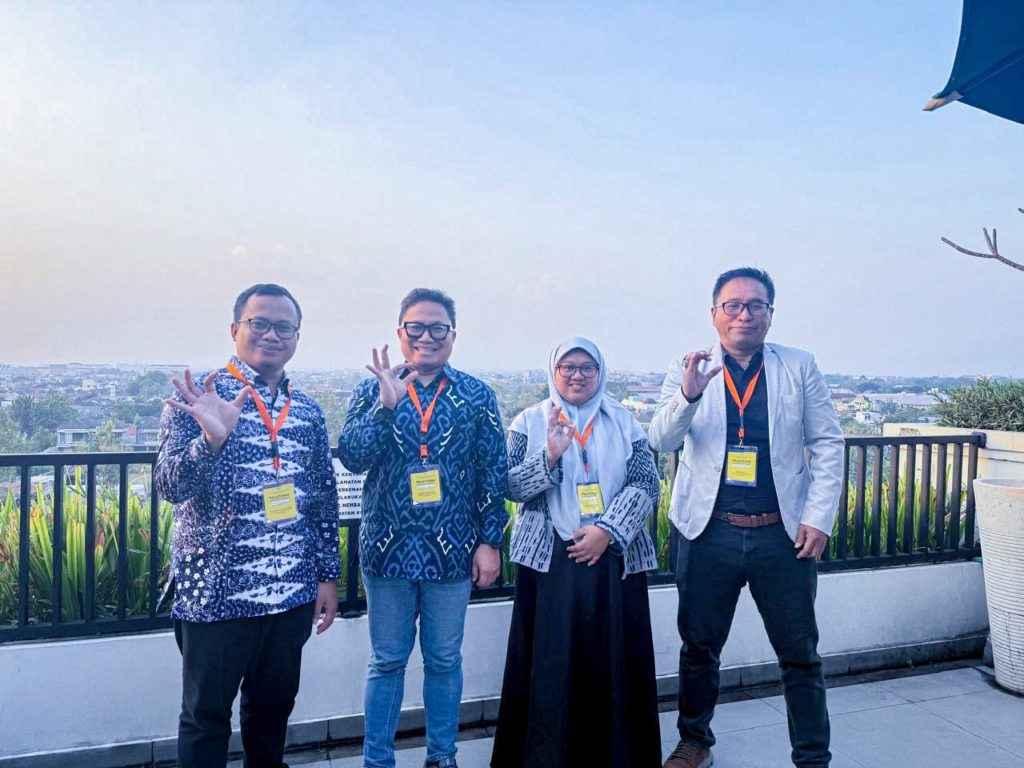
Yogyakarta, 7 August 2026 — In early August, four delegates from the Universitas Islam Internasional Indonesia (UIII) travelled from Depok to Yogyakarta for four days of intensive learning and professional development in higher education quality assurance. More than a training program, the experience provided an opportunity for UIII’s quality assurance personnel to strengthen their competencies, exchange perspectives, and learn directly from quality assurance practices across Indonesia’s higher education sector.
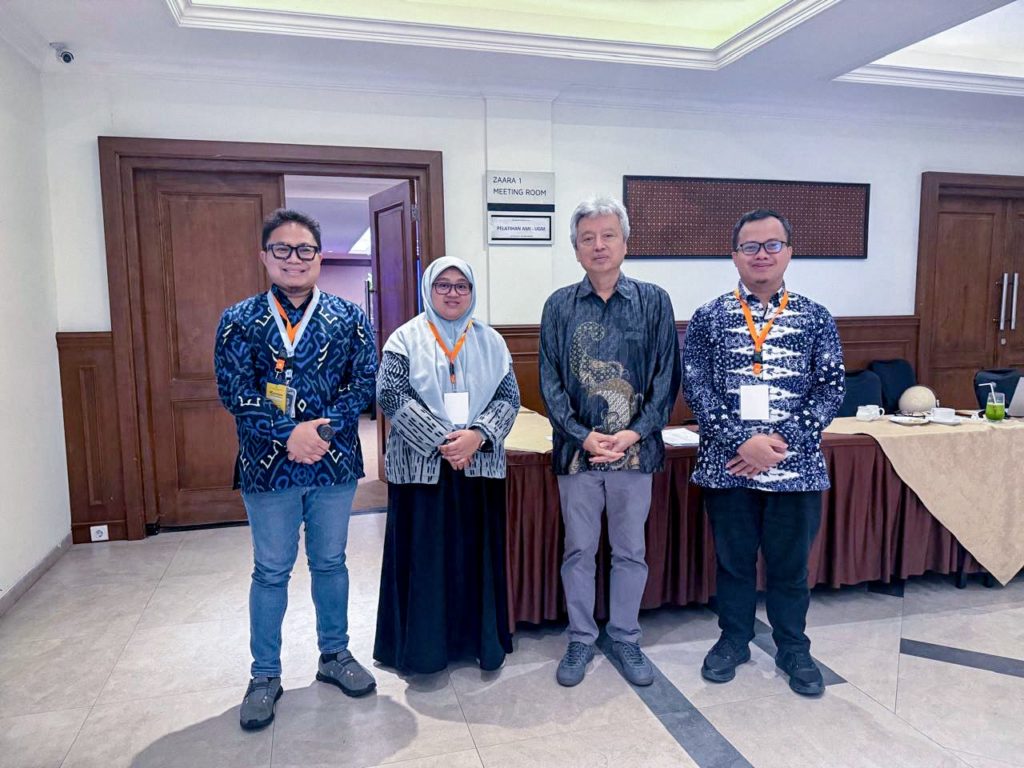
The delegation comprised Dr. Akhmad Mughzi Abdillah, Maryam Qonitat, Ph.D., Ridwan, Ph.D., and Dr. Indra Gunawan. Their participation represented the ongoing commitment of UIII’s Center for Quality Assurance (PPM) to strengthening the people, systems, and practices that underpin the University’s Internal Quality Assurance System (SPMI) and to fostering a sustainable culture of continuous improvement.
Held at the Grand Rohan Jogja Hotel from 4 to 7 August 2026, the program consisted of the Higher Education Internal Quality Assurance System Training (SPMI-PT) on 4–5 August, followed by the Internal Quality Audit Training (AMI) on 6–7 August. The program was conducted in coordination with the Quality Assurance and Internal Audit Office (SPMRU) of Universitas Gadjah Mada (UGM).
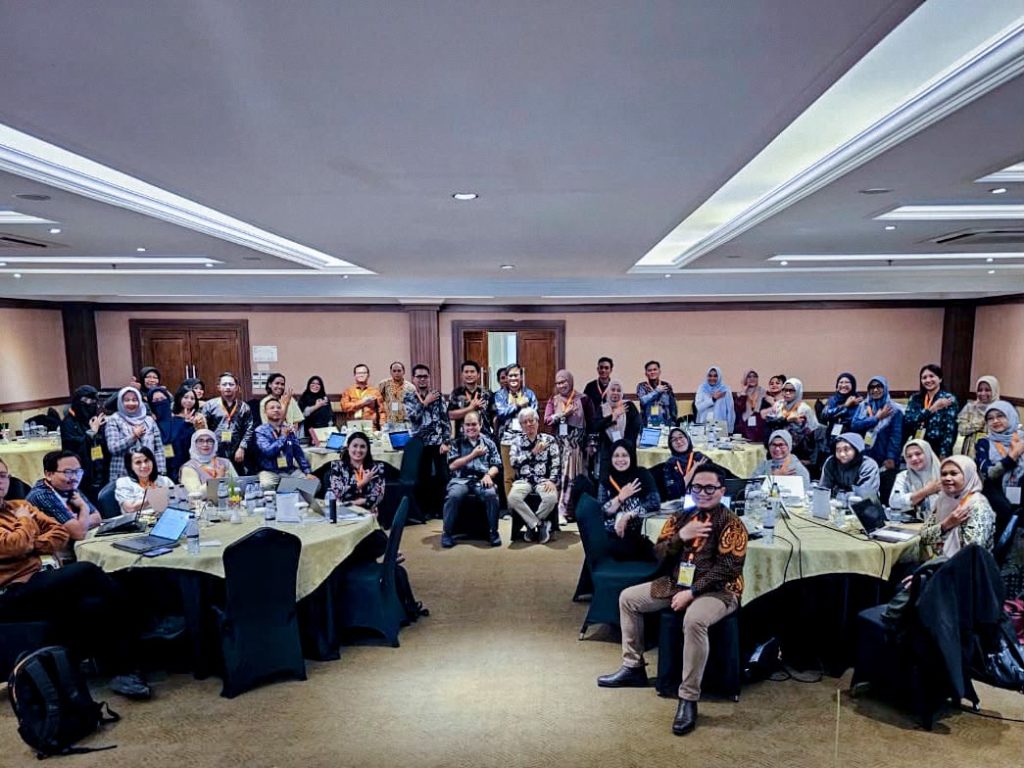
The program brought together 77 participants from various higher education institutions across Indonesia, predominantly institutions under the Ministry of Higher Education, Science, and Technology. As a university under the Ministry of Religious Affairs, UIII’s participation created a valuable opportunity for cross-ministerial learning and professional exchange.
For UIII, this engagement represents a proactive approach to quality improvement. Rather than developing its quality assurance system in isolation, UIII is actively benchmarking its practices, competencies, and quality assurance mechanisms within the broader national higher education landscape.
Strengthening the Foundation of Internal Quality Assurance
The first part of the program focused on the Internal Quality Assurance System for Higher Education (SPMI-PT) and the latest national framework for higher education quality assurance, particularly Minister of Higher Education, Science, and Technology Regulation No. 39 of 2025.
A central theme of the training was the PPEPP cycle: Determination, Implementation, Evaluation, Control, and Improvement, which forms the foundation of systematic and continuous quality assurance. Participants also explored the relationship between internal and external quality assurance, academic and quality documentation, and the role of digitalization in strengthening quality management.
The program further examined Outcome-Based Education (OBE), emphasizing Graduate Learning Outcomes (CPL) as the foundation for curriculum design, learning processes, and assessment. Participants discussed how OBE can be integrated into SPMI so that the achievement of learning outcomes becomes part of a continuous process of evaluation and improvement.
For UIII, these perspectives are particularly relevant as the University continues to strengthen its academic and institutional systems. Effective SPMI requires more than establishing standards; it requires standards to be implemented, evaluated, controlled, documented, and continuously improved through a systematic institutional process.
The training also emphasized the importance of consistency between academic and quality documents. Academic policies, curricula, course plans, program specifications, quality standards, procedures, audit results, and follow-up actions need to function as an interconnected system rather than as separate documents.
From Quality Assurance to Evidence-Based Auditing
The second part of the program shifted from the broader framework of SPMI to the practical implementation of Internal Quality Audit (AMI).
Participants explored the audit cycle, from planning and team formation to document review, checklist development, field auditing, reporting, and follow-up. The training also introduced a risk-based approach to auditing, emphasizing the importance of directing audit attention toward significant risks and assessing the effectiveness of institutional systems in managing them.
The training reinforced a fundamental principle of AMI: an internal audit is not simply an exercise in verifying whether documents exist. Rather, it is a systematic process of examining whether standards are effectively implemented, whether institutional claims are supported by evidence, and where opportunities for improvement can be identified.
The practical sessions included document and system audits, field simulations, audit reporting, and the development of corrective and follow-up actions. Participants also strengthened essential auditor competencies, including interviewing, observation, report writing, conflict management, and constructive feedback.
For PPM UIII, strengthening these competencies is particularly important as the University continues to enhance AMI as an integral part of its internal quality assurance cycle.
Putting Audit Competencies into Practice
The training moved beyond classroom learning through a practical AMI simulation involving the UIII delegates.
Maryam Qonitat, Ph.D., participated in Group 2 of Class A, while Dr. Indra Gunawan served as the Head of the Audit Team in Group 3. The Group 3 team conducted a simulated audit of the Master’s Program in Agricultural Industrial Technology at UGM’s Faculty of Agricultural Technology.
The exercise involved reviewing academic documents and supporting evidence, identifying audit findings, and preparing corrective action plans and an audit report. The simulated audit identified several issues, including inconsistencies in course codes and names across academic documents, differences in credit requirements, limited accessibility of tracer study information, unsupported claims regarding an international program, and inconsistencies in assessment indicators.
For the UIII delegates, the simulation provided an opportunity to experience the practical dimensions of internal auditing firsthand: asking questions, examining evidence, distinguishing findings, discussing observations, and translating audit results into concrete follow-up actions.
The experience also highlighted the importance of leadership and teamwork in the audit process. Dr. Indra Gunawan’s role as Team Leader provided additional practical experience in coordinating an audit team and ensuring that the process remained focused on evidence, audit criteria, and opportunities for improvement.
Bringing the Learning Back to UIII
The significance of the program extends beyond the four days spent in Yogyakarta. The knowledge, practical experience, and perspectives gained by the delegation provide PPM UIII with valuable references for further strengthening the University’s internal quality assurance practices.
The program deepened participants’ understanding of the latest quality assurance framework, the role of AMI within the PPEPP cycle, OBE implementation, the relationship between SPMI and external quality assurance, and the practical competencies required to conduct evidence-based internal audits.
These competencies can support several areas of ongoing quality development at UIII, including strengthening internal auditor capacity, improving the integration of academic and quality documentation, enhancing AMI procedures, and ensuring that audit findings lead to meaningful corrective and improvement actions.
The cross-institutional nature of the program also offered UIII an important opportunity to benchmark its quality assurance practices directly with those of other higher education institutions. With 76 participants coming from diverse institutions, the program created a broader professional environment for sharing experiences, comparing approaches, and learning from different institutional contexts.
For UIII, which operates under the Ministry of Religious Affairs, participating alongside institutions predominantly under the Ministry of Higher Education, Science, and Technology represents a meaningful step toward strengthening its engagement with the wider national quality assurance ecosystem.
This does not simply position UIII as a participant in a training program. It reflects a deliberate effort by PPM to ensure that UIII’s quality assurance practices remain open to comparison, learning, and continuous development within the broader landscape of Indonesian higher education.
Strengthening the Culture Behind the System
The participation of PPM UIII in the SPMI-PT and AMI training reflects the University’s continuing investment in the human resources behind its quality assurance system.
The four delegates returned to UIII with strengthened knowledge, practical audit experience, and broader perspectives on the implementation of internal quality assurance. More importantly, they brought back lessons that can be translated into the University’s ongoing efforts to strengthen SPMI and AMI.
The experience also reinforces the strategic role of PPM—not merely as a unit responsible for administering quality assurance procedures, but as a driver of institutional learning, evaluation, and continuous improvement.
For UIII, strengthening quality begins with strengthening the capacity to understand standards, examine evidence, learn from findings, and translate evaluation into meaningful improvement.
The four days in Yogyakarta therefore represented more than professional development. They formed part of UIII’s continuing effort to build an internal quality assurance system that is evidence-based, systematic, collaborative, and connected to the wider national higher education landscape.
Through continuous learning and cross-institutional engagement, PPM UIII continues to strengthen the foundation for a quality culture that supports academic excellence, institutional development, and sustainable improvement.